By Mackenzie Branstad
In Fayetteville Arkansas the streets are lined with famous fast food chains and options for a convenient meal for busy pedestrians. Although the reality for many residents in the area isn’t deciding what they want to eat, they are deciding the next time they will be able to eat. One in six people in the Northwest Arkansas area do not have enough food to eat on a daily basis. As of 2025, the state of Arkansas is ranked number one for food insecurity and in past years Arkansas has consistently been ranked in the top five.
“A person’s brain is like a car,” Rodrigo Menocal explains, “You can give the car premium gas and it will run better or you can give it water and it won’t run properly,” he said. Under the bright glare of the infamous McDonalds arches, Rodrigo tends to the cozy one acre farm that he runs entirely by himself for Cobblestone Farms. The micro farm is hidden on a gravel road with a little fence in between a big blue dumpster and a white shipping container. Rodrigo inspects each plant individually and as we walk he explains why each vegetable is planted. Rodrigo loves to know that he is giving people who need it the “premium gas” that they deserve.
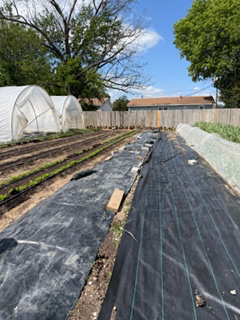
As Rodrigo walks the crowded farm where he plans to grow 5,000 pounds of vegetables this year for Cobblestone Farms to give to the food pantry. He walks through the row of green beet stems ready to be plucked. As well as the lettuce, parsley, cucumbers, peppers and tomatoes and everything else that he can fit on the single acre of land.
In 2025, 34,272 pounds of fresh organic produce was donated to four Northwest Arkansas communities by Cobblestone Farms. The farm’s focus is feeding students and families in Northwest Arkansas schools and providing food pantries with nutrient dense food. They exist to cultivate a community free from hunger through sustainable agriculture as the food insecurity levels rise in Arkansas.
With increasing inflation rates, groceries and necessary items becoming harder to afford for everyone but are unmanageable for people who are already struggling. The inflation rate in the United States increased to 3.30% in March 2026 compared to 2.40% in February of 2026.
Rodrigo was born and raised in Peru, after high school he moved to New Jersey with his family and in his senior year of college got an internship with Walmart and moved to Northwest Arkansas. Bored of staring at his computer screen for ten hours a day working from home for a decade as well as showing signs of prediabetes, Rodrigo wanted more for himself. “It doesn’t matter if I have a great job if I am sick,” Rodrigo said.
That is when Rodrigo and his wife Lucy decided to move to Pennsylvania for a year to study regenerative and organic agriculture. As the garden managers at the two locations of Cobblestone Farms, Fayetteville and Springdale. Rodrigo now feels a life fulfillment he was not receiving in supply chain management.
Every afternoon and weekend Rodrigo and Lucy grow culinary grade mushrooms. They host workshops once a month to teach the community how to grow their own mushrooms at home.
“If you want to grow mushrooms you don’t even need a backyard,” Rodrigo says. In workshops he explains why mushrooms, does hands-on activities on how to grow them and how to cook with mushrooms. Rodrigo wants to make his students self-sufficient and teach them that growing vegetables can be easy. His face lights up as he is talking about an everyday vegetable like mushrooms but it is more than just a plant to him it’s a passion and he wants everyone to learn how easy it is grow vegetables on their own.
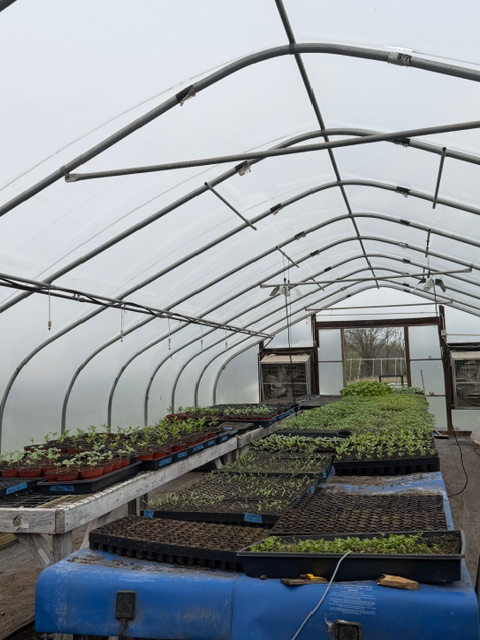
Photo by Mackenzie Branstad
There are many other food pantries, farms and government assistance programs created to help combat food insecurity like SNAP. SNAP (Supplemental Nutrition Assistance Program) was created to help families afford things like groceries and various items based on household size, income and assets. SNAP was helping over 41 million people in the United States in 2022.
5.6% of Washington county residents participate in SNAP. Arkansas distributed $500,000 across six food bank networks in the state when the SNAP benefits were supposed to be cut in November. One-in-five rural residents received SNAP compared to 15 percent of urban residents in Arkansas. There is estimated to be a food desert in all 75 counties of Arkansas meaning that a resident has to travel more than one mile in urban cities and ten miles in rural cities to obtain nutritious and fresh food. Rural residents especially those who live in food deserts are more likely to be food insecure especially without a form of transportation.
Michael Niño is an Associate Professor in the Department of Sociology and Criminology and serves as the Director of the Arkansas Health Equity and Access Lab (HEAL) at the University of Arkansas. Niño collects data from people across Arkansas every year. This is to get an estimate on how many people in Arkansas are struggling and the best ways to help them. He found that 45% of black Arkansans 42.9% of hispanic Arkansans and 25% of white Arkansans are food insecure.
Many residents of NWA are reliant on organizations and meal plans that help fund lunch at school which is why so many food pantries and other organizations are created to help them. 31% of food-insecure young people, especially children, feel stressed or worried every day where 10% of food-secure students feel stressed or worried every day. This is the reality for people like Randy.
Randy stands in his kitchen after a long day of cleaning at the University of Arkansas, ready for his one meal of the day. On days before payday he is preparing himself a classic peanut butter and jelly sandwich. One for him, his three children and his wife as well as his brother from time to time, Two of his kids have been diagnosed with autism and don’t like textures of certain foods. His kids all go to different public schools in the Fayetteville area and are given two meals a day by the school as well as “food boxes” every two weeks.
“Some of the stuff they give us has expired by a few months or even a year,” said Randy. His family uses food pantries at churches and applied for SNAP benefits but was declined because his family made one dollar over the benefit cutoff. His wife also works a full time job but he says the cost of living is too high to afford both living and food.
“I grew up in a family that didn’t have a lot of money. We ate what we could,” said Randy. The biggest support to Randy is his friends and family as well as his boss. His boss will sometimes give Randy paychecks early to afford food for his children.
Up the steep stairs by the parking garage in a small corner near the student union building at the University of Arkansas is home to a food pantry on campus. To get something from the pantry you need a student ID card or faculty card. Having a food pantry has issues especially when it comes to fridge storage, kitchen space and shelving. The kitchen and office are compact in a small space of the pantry on the side of the shelves. They sometimes have to decline donations due to the lack of storage space. Ava Caron is one of two interns at the Full Circle Food Pantry on campus.
When walking through the few aisles with Caron it looks like a lot of food. Shelves upon shelves of colorful cans of vegetables, beans, soups and bright packaging of various snacks and jars of peanut butter all clearly organized with labels. Loose items in big black boxes. Many people who use the food pantries roommates and family members rely on it as well but the pantry has limits. They will serve any person in the community at least once then they will help them get the help they need after if they can not accommodate them in the future.
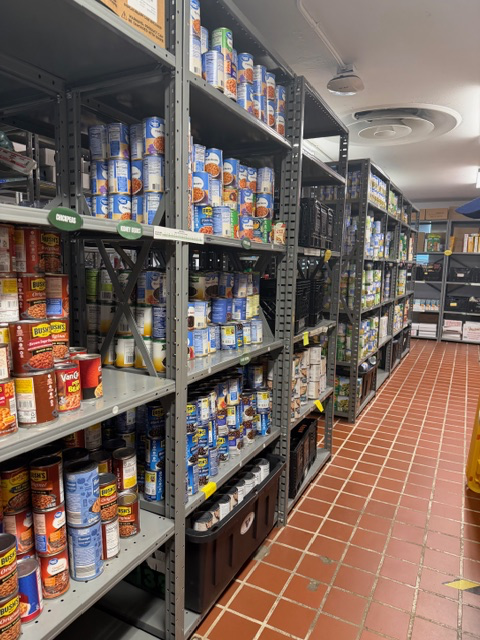
Photo by Mackenzie Branstad
They do their best at the food pantry but sometimes due to lack of space, funding etc. they can’t help everyone. Some items that go by fast at the pantry are snacks like granola bars, crackers and cereal. They also have items like feminine hygiene products, diapers, sponges and Caron says a lot of those items are very popular and run out quickly.
As thousands of people in Northwest Arkansas don’t know the next time they will have access to food this uncertainty creates anxiety for people struggling especially kids. This directly affects children’s well being in the classroom and It is hard to focus on school when a student doesn’t know if they will eat after school. Many schools offer help to food insecure families like two meals a day and food boxes. The constant anxiety on students will hurt them in education and could inflict future mental health conditions. Constant worry at a young age can lead to anxiety disorders and depression later in life. This impact goes beyond helping individual people and mirrors greater trends across the state.
Despite Arkansas being the birthplace of big corporations like Walmart, Tyson, JB Hunt etc. Economic inequality, learning divides and poor access to higher paying jobs contribute to the food insecurity issue. “All of it is in a constellation together,” Niño said.
“The cost of living is so high,” Randy says. Randy has to put all of the money he makes in his long hours cleaning to his bills to make sure his family has a place to live. Even with the dual income it still isn’t enough to pay for housing and food for their family. Being food insecure is becoming more common as prices continue to rise. Even though Arkansas is known for being an agricultural state and not typically considered to be poorly funded, so many people are food insecure and this issue is disrupting thousands of people every year just in the NWA area as well as millions across the country.
“Single parent households, underrepresented populations and people of color are affected most by food insecurity,” said Baum, the director for human nutrition at the University of Arkansas. “Being food insecure is a constant burden of stress,” said Baum.
“I think we are going to see a lot more food insecurity as the prices of groceries go up,” Baum said. In January 2000, the average cost of ground beef was $1.48. In January 2026, the average price for a pound of beef cost $6.75. As prices continually increase it is harder for Americans to afford forcing citizens to find cheaper less nutritious options which will also lead to a higher obesity rate and lower life span.
A major part of nutrition is the preparations and access to a place where items can be stored. Also being able to get to a grocery store if a car isn’t available. Without storage, residents can’t have access to cooking and have to resort to nonperishable processed items.
Ninety-seven-year-old Becky is a regular visit for Alyssa Snyder, chief seeder at Seeds that Feed. Becky has been actively receiving food from Seeds That Feed since she was in her early 80s. As a single mother of eight children and owner of a shoe store chain, Becky struggled to keep her children fed. Even in her 80s, Becky would come to the farm and help out where she could and has in recent years been diagnosed with dementia. Her daughter bought her a two bedroom cottage in the same complex she lives in and told Alyssa that she noticed a difference in her mothers brain health when she ate the mushrooms she brought. She also shared with Alyssa that she would only eat what was brought to her by Seeds That Feed and was entirely reliant on their pantry.
Stories like Becky’s have become more common across Northwest Arkansas, someone like Becky who has spent her entire life providing and working for her family is still so reliant on these food assistance organizations just to get by in her older years.
Behind every statistic is a real person who struggles constantly and could be a neighbor, someone on the street, a friend and until needs are met that person will continue to struggle every single day. Even with benefits like SNAP, food pantries and non-profit farms like Cobblestone the demand for food is overwhelming and growing. The burden of food insecurity is a struggle that impacts thousands of people in Northwest Arkansas everyday.
As the drive-thrus of all the fast food chains remain busy, Rodrigo continues to take care of the single acre farm between the dumpster and storage container. As cars drive the busy street, most don’t even realize the farm even exists as Rodrigo continues to work five days a week harvesting heads of lettuce and picking tomatoes to give to the community then returning home to manage his mushrooms.
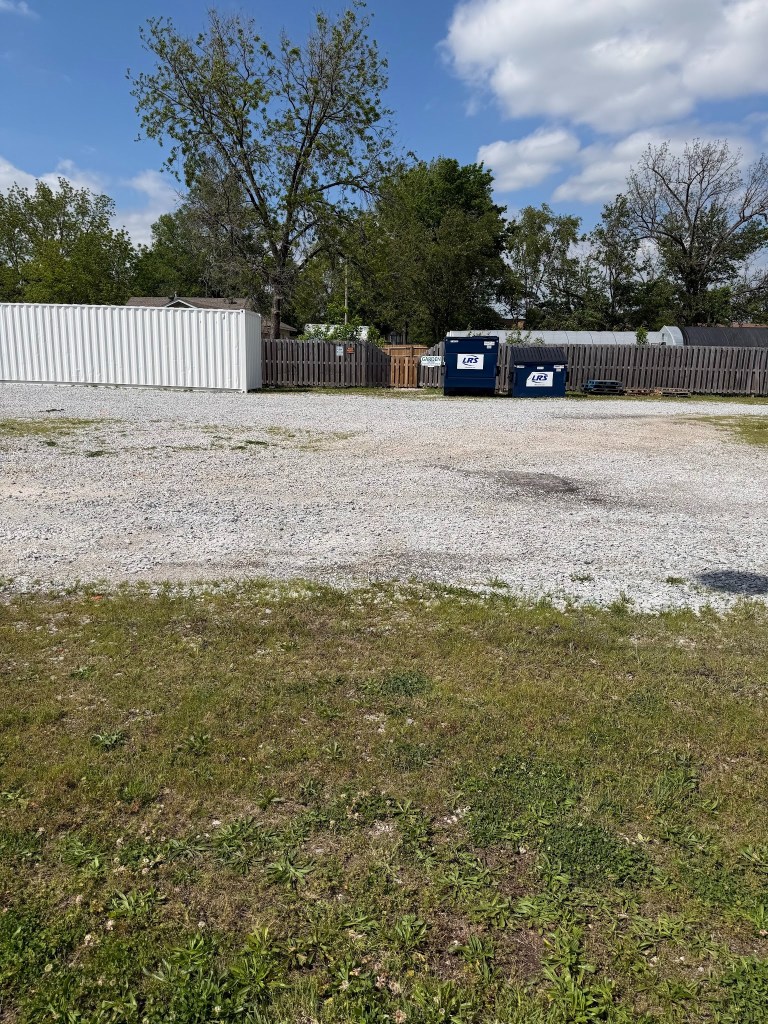
Photo by Mackenzie Branstad


Leave a Reply