By Mackenzie Branstad
FAYETTEVILLE, Ark.- When Cooper Mahaffey was in middle school in Oklahoma, he had a birthmark right above his lip. In class, Mahaffey was teased because kids said that it looked like his nose was running and the mark became an insecurity for him. Mahaffey spent time researching laser treatments and eventually convinced his mom to get the birthmark removed at twelve years old.
“I just want to be my best self inside-and-out,” Mahaffey, 24, said.
Men like Mahaffey, represent one of the fastest growing demographics in aesthetic medicine. In 2024, men underwent 1.6 million procedures, a 4% increase since 2023. According to Dr. Glynn Bolitho’s blog, over the past decade male aesthetic patients have increased by 88%, demonstrating a new interest in aesthetic treatments.
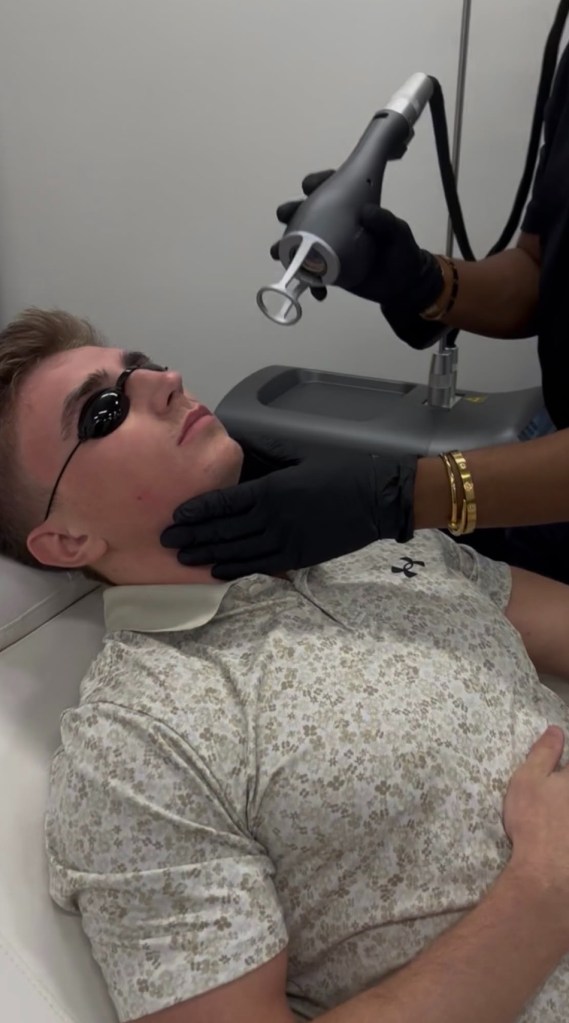
Photo courtesy of Cooper Mahaffey
As availability and awareness of aesthetic treatments become more popular, aesthetic professionals like Irma Perez, are noticing new numbers of patients. Perez, has her masters degree and is trained to administer botox and other aesthetic treatments like dermal fillers at Inspire Wellness in Rogers Arkansas. She believes that more people are willing to get treatments because of the awareness.
“I think that there is more awareness because of social media and it is not such a quiet thing anymore,” Perez said.
According to the American Society of Plastic Surgeons, In 2021, some of the most popular aesthetic treatments among men were muscle enhancements and contouring, hair transplants, chin augmentations, injectables like botox and fillers as well as liposuction and tummy tucks.
“If I can see the value in making a change to my body, there’s probably a lot more people looking for the exact same thing,” Mahaffey said.
When Mahaffey graduated from Oklahoma City University, at 130 pounds he decided to make a change and began using peptides which made him gain 32 pounds in four months.
“When I was 22 and 130 pounds, I didn’t feel like I could be a father or someone who raises strong kids,” Mahaffey said. “Once I made that change in my life and found out that I could take control of my environment and achieve those things, it gave me the confidence to not be worried about what others think about me,” he added.
For some, the choice to change their appearance is based on personal insecurity, like a birthmark. In a more digital age expectations to look a certain way are amplified by social media. According to the American Psychological Association, from an early age boys and men face pressure to conform to traditional masculinity norms. Many men are using social media as an outlet to discuss these norms and how they can improve their masculine appearance.
In the United States, Instagram has more than 46 million male active monthly users. Traditional media like fashion magazines have mainly been targeted towards women and girls. According to Science Direct, a number of experimental studies have proven that thin idealized Instagram photos lead to increased body dissatisfaction in women. For both genders, the negative impact of traditional and social media is mostly because of comparison.
For men whose work involves being on camera through digital meetings or content creation on social media their appearance is a noticeable part of their daily life. Shayne McKinney, 44, a social media personality in Northwest Arkansas, with over 500,000 followers on TikTok, openly posts videos online about his recent hair transplant.
In December 2025, McKinney decided to get his hair transplant but for a few years, he noticed hair loss became more prevalent, which made him feel insecure. Since McKinney is a content creator, his long black hair is a part of his brand. He wanted to avoid losing his hair and refused to shave his head because of his work.
“As a content creator, I always had to make sure camera angles were pointed at the front of my face and I wouldn’t film anything with my back to the camera,” McKinney said.
McKinney wants to use his platform transparently in order to encourage his viewers to take control of their own insecurities by sharing his hair transplant journey online. Mckinney posted a video after the procedure explaining his hair loss journey as well as the 22 hour procedure he endured in Turkey.
“The procedure was safe and easy to do, when I saw there was a problem I thought ’why not?’ ” McKinney said.
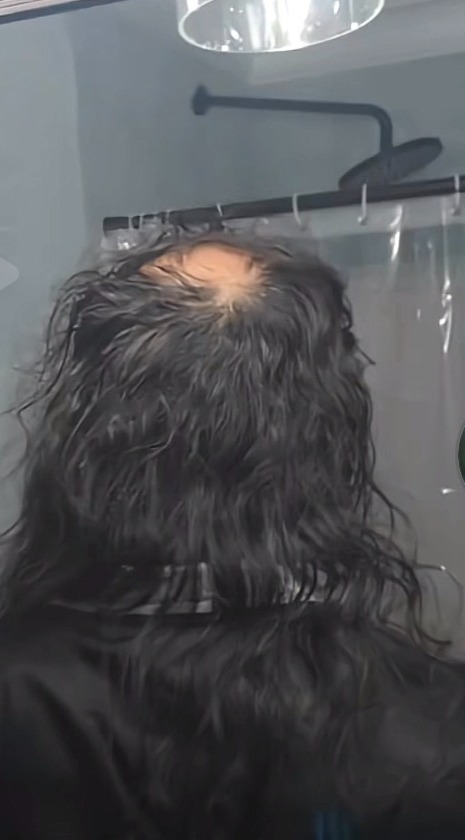
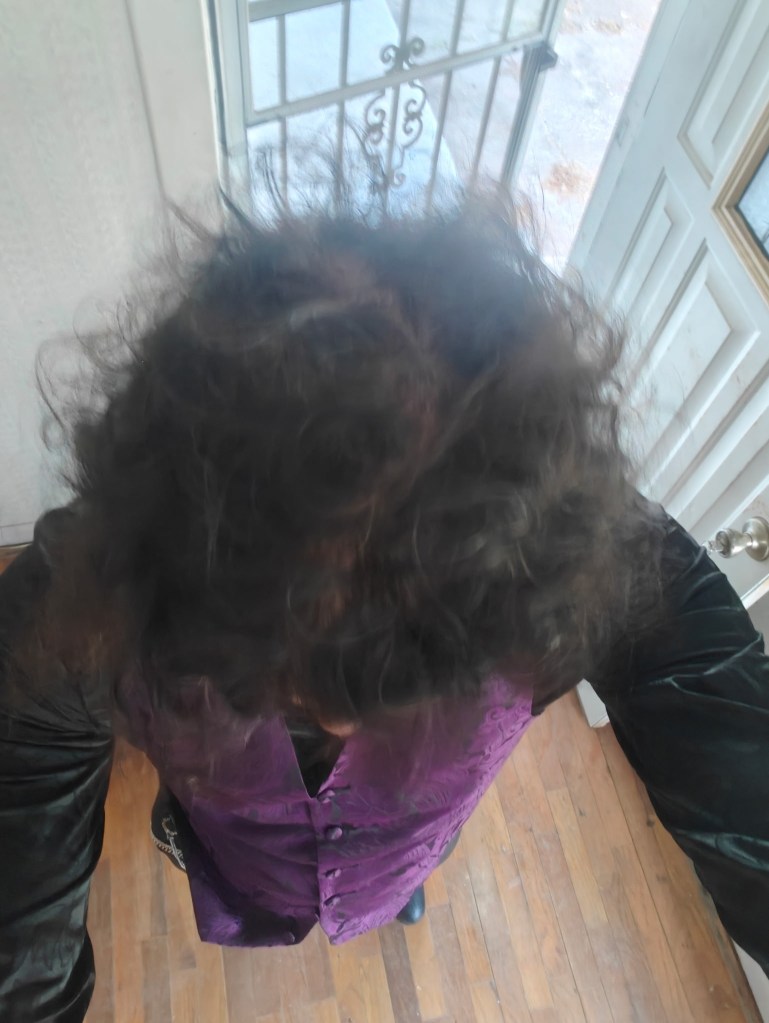
Before and after photos provided by McKinney
As men like McKinney grow more open about sharing appearance enhancers online, trends like looksmaxxing are becoming more popular demonstrating a new version of masculinity. In 2026, looksmaxxing became an internet sensation where men try to make themselves look more attractive on social media.
Looksmaxxing includes sharp jawlines and trenchant bone structures as well as muscular body types. Braden Peters, commonly known as “Clavicular” is a social media influencer known for looksmaxxing. According to GQ, Clavicular takes his looksmaxxing to an extreme. He is known to have smashed his own face with a hammer to make his bones regrow sharper.
“I think the overarching habits that looksmaxxing teaches is great, like being able to have self-care but not the unhealthy additions of it,” Mahaffey said.
Looksmaxxing trends are creating a different kind of body dysmorphia for men, something that women have dealt with for years, Kathryn Sloan, a Professor and Director of Gender Studies at the University of Arkansas believes.
According to the International OCD Foundation, women make up 60% of Body Dysmorphic Disorder patients where men make up 40% of patients. Looksmaxxing is creating a space for men to compare appearances. Sharpest jawline, most defined muscles trying to present the most masculine version of themselves.
“Men are trying to carve out who they are supposed to be and how they can continue to be men because women have more and more education and opportunities now,” Sloan said. “I think it’s almost like they’re trying to find their niche, like how they can redefine themselves as men,” Sloane added.
Noticing how his aesthetic treatments greatly impact his own life, Mahaffey gained confidence and created his career around aesthetics treatments. He now spends his work day learning about aesthetic treatments in order to make his clients become the most confident version of themselves.
“I think it’s your attitude and who you are as a person that matters. Who wants to read a beautiful book with ugly words?” Mahaffey said.

Photo courtesy of Cooper Mahaffey


Leave a Reply